Thursday Media Review: Yugioh master Duel

written by TheChoujinVirus

Disclaimer: This review may contain spoilers to this game.

Yu-Gi-Oh is a card game that everyone knows about, one of the significant TCGs people have known about for a long time. Yu-gi-oh has many games, with the recent being 2016’s Yu-gi-oh Duel Links. Though released this month of January 19th is the latest incarnation of the game. Yu-Gi-Oh Master Duel. A game found on Steam, Switch, and on your smartphone. If you’re interested, let’s see how this game goes well.

Brief Summary of gameplay

Yu-Gi-Oh Master Duel follows the more current rules of Yugioh (Master Rules 2020/2021). One could explain the whole aspect of the game, but here’s a link from the official Yu-Gi-Oh website that gives a better explanation of how to play the game. However, to summarize the game, you play monsters, spells, and traps to reduce your opponent’s life points (LP) to 0 before they can. You have the duel mode, which pits you against other people online, though you have a unique model known as “Solo” mode. The solo mode is the game’s story mode in a sense. Not much of a story except explaining the lore of the archetype you’ll be playing. For example, one of the Solo stories has a cute story explaining the Cyber Bug archetype and its role in that universe. They also teach you how the archetype is played and even some combos that give you a way of what other archetypes can go well or how to play the deck further. The solo content rewards things like cards of the archetype, a free deck of the archetype (think of it as akin to the game’s version of a structure deck), and some good things like cosmetics and gems (the premium currency of the game). Gems are used chiefly for buying booster packs to improve your deck or some cosmetic items such as mats for your cards, sleeves for them, and even little pets that sit on your side on the field (they do not affect the game, but they sit there).
King of Games: What the Game shines in.

The game has so much potential that it makes it impressive. One such example is that compared to Duel Links, you do have a ton of cards to build any archetype you want, from Blue-Eyes to Cyber Dragon and then some. You’re not limited to specific cards. Another benefit is they introduce “Secret Packs” now. What are these Packs? Well, whenever you craft a card in the game or open a master pack, you may get a chance of finding some cards of a specific archetype. These secret packs are more or fewer archetype packs that let you get that core card set without playing gamble with the Master Packs themselves. It also makes investments oh so worth it if you’re building decks. Lastly, the soundtrack is excellent as you get some good music while you duel, and the tone changes whenever things like close to victory or when a boss monster is summoned to the field. It’s got plenty of work.

Dueling Dog: what the game flounders.

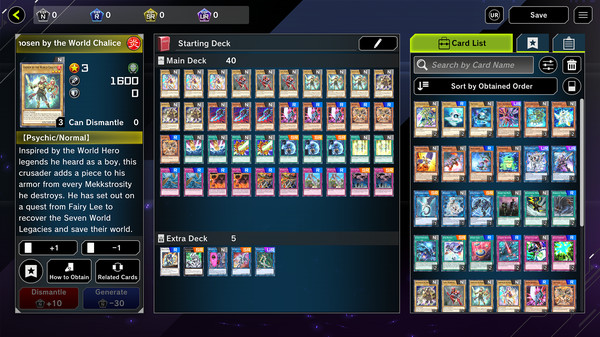
Though the game is good, it has some significant flaws. One such is that the game kind of tosses you into the series right away. So new players entering the first time or old players who haven’t kept up with the franchise may be overwhelmed with all the new mechanics. Luckily, the tutorial does teach you the basics, but most of the time, there are some things the tutorials won’t explain that require experience. Another issue is the crafting and premium currency. When building a deck, you’ll be using some UR (ultra rares) staples that can be expensive as you may have to cannibalize some other UR cards to get something viable. I wish they could convert some of the Normal, Rare, and Super rare tab to acquire UR materials without buying boosters. Lastly is the Secret Packs duration. When you unlock them, you only gain access to them for around a day, then you have to get the cards again, which can be inconvenient if you need to get some cards from other aspects. Another and officially final thing is there are no other duel formats. While Duel Links gave us Speed Duels (a format for faster play), master duel only has one format, which is current, which means if you want to play a game with no Link Monsters or Pendulums. So no old days of just playing old-school rules or other formats.

Should you D-D-duel and get this game?

In short, should you get this game? Yeah, you should if you’re a fan of Yugioh. Also, ever since Dueling Network got shut down and Duelist of the Legacy became obsolete with the current gameplay, Yugioh Master Duel’s something that requires you to understand and play. Also, as a former YuGiOh player, it’s something great to do. By the way, I do play the game too and if curious, I roll a Cyber Dragon deck. If you’re interested look up “TCV” and you’ll see me. If you want to add me as a friend, DM me if you want

References

Christmas Media Review: Monster Rancher 1 & 2 DX

Written by TheChoujinVirus
Note: The following review may contain spoilers to the games

Merry Christmas everyone, it’s ya boy Choujin with a Christmas gift for you all to enjoy.
I remembered not too long ago, I did a review of the Monster Rancher Anime not too long ago, and I brought up the Monster Rancher anime (I’ll be redoing that in the future as I felt reviewing whole seasons wouldn’t be a good idea.) In that review, I mentioned the game series. You had the original released in 1997 and the 2nd game released in 1999. Through December 9th, 2021, came the release of a game that Koei-Tecmo made before. That is Monster Rancher 1 & 2 DX, a game port released for Smartphones, Nintendo Switch and Steam. How does this game stack up? Here’s my review of Monster Rancher 1 & 2 DX

Summary of the Story

Monster Rancher 1 and 2 have different settings and locations. Still, they all have one story in common: You are a rookie Monster Breeder that is hired by FIMBA(Monster Rancher 1) or IMa(Monster Rancher 2) to raise monsters and become a Master Breeder of monsters.
You usually have two choices of how to get your monsters: a choice of three starter monsters (Eg. Dino, Tiger, and Suezo in MR1; Arrowhead, Zuun, and Mochi in MR2) or using CDs to unlock other monsters. The remake solves the gimmick by providing music/game data that gives you some monsters and some (since modern items do not have access to CD disc drives).
Once you acquired your monster, you now have to do the following to get them ready to fight in battles, like doing jobs or drills to power up your monster or acquire money. Feed your monster to ensure they have the nutrients for training, jobs, and battles. You also make money from side things like jobs and expeditions, though the money you’ll be making will be through the game’s tournaments you’re participating.
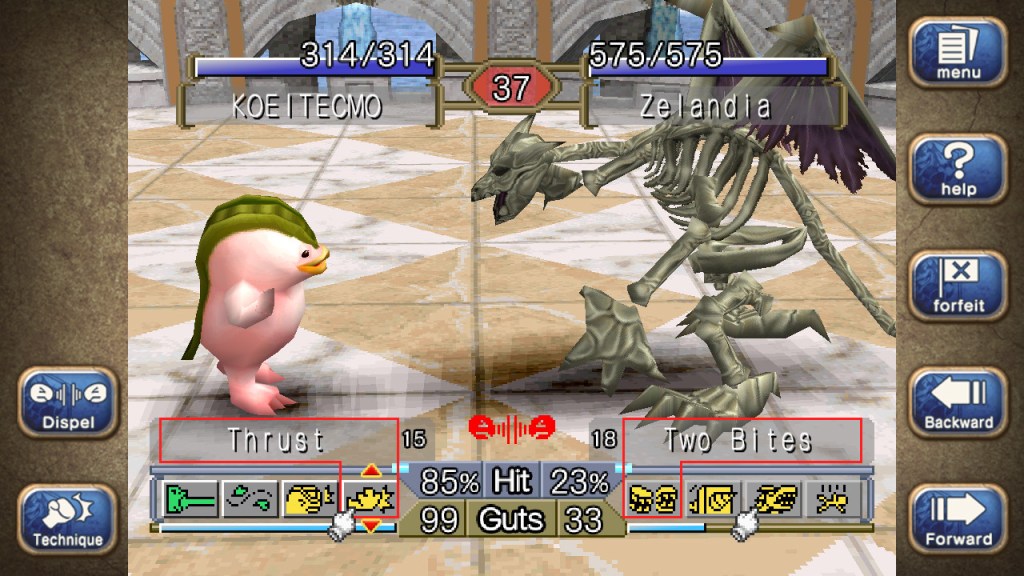
Monster Rancher 1 and 2 usually use a Round Robin style tournament (though Monster Rancher 2 gives us Elimination). Winning the matches will usually provide you with money, sometimes a prize like Disc Chips, medicine, and even rare items like a Dragon’s Horn. The Official Tournaments will raise your monster rank, which helps you unlock new monsters, upgrade your ranch, and allow your monster to fight the next grade. Starting at E Rank, you must work your way up to S Rank, then win the Big Four Tournaments to beat the game (MR2 lets you have a new one called the Legend Cup, which immortalizes your monster in the Hall of Fame.) However, it’s not as easy as just doing jobs and going into tournaments. You have to manage everything about your new monster. You have to manage their diet, training routines, when to rest, and lifespan. That’s right, monsters can grow old and die due to many things like giving them too much medicine, forcing them to run ragged, or them getting hurt in tournaments. Luckily you can freeze old monsters and fuse them in the future to make stronger monsters for your progress. You also have Expeditions, which are minigames that allow you to use your monster to explore around a map to search for rare items and stuff to sell or help raise your monsters once acquired. Battles are unique as you manually move your monster between several distances (Far, Mid-Far, Med, and Close). Each range has access to an attack that your monster can use by spending energy known as “Will.” Some attacks will inflict something called Withering, which not only damages but reduces Will on the target. The fight lasts for 60 seconds, and the objective is to either KO your opponent or have more Life than your opponent. Just remember to ensure your monster isn’t KO’d with Low Will as that can badly injure your monster or, worse..kill them in the arena.

Best in Show: What the game excels in

1 & 2 DX solved a lot of the gimmick problem of the old with the music data. You don’t need any third-party device as the whole thing is on the cartridge/game itself; thus, you can play offline without needing a connection. It’s also an innovative way of providing access to monsters that would have been lost due to the modernity of technology. Another is that the monsters themselves look fantastic. Each monster species is unique through various means such as stat growth, moves, playstyles, and even lifespans. Monster Rancher 2 takes the age by adding multiple types of lifespan growths. Some can have normal development, others burn out like a bright candle, and some just are late bloomers. There’s no definite raising method for some monsters. Lastly, the game itself introduces a form of online PvP, which is your monster vs. an AI-controlled opponent of other players (or you can have an AI vs. AI fight.) This has not only brought some ways of battling other players but even brings on competitive tournaments online

Worst Breeder: What the game lacks

One of the most significant issues of the games is that there’s no explanation for the mechanics themselves. First-time players will not know side things like stress management, the lifespan of monsters, percentage, even knowing about the spoil/fear mechanic. Also, not knowing that some drugs and battles will cut lifespans short. Monster Rancher 2 is just as complex as some fans of the game made an advanced third-party viewer needed to better understand the hidden mechanics behind them. It can become annoying with expeditions as you may need 3-4 stats to boost for an expedition monster (Life, Pow, Skill, and Int) and that Int is the factor that can determine your monster’s success (and ensure they don’t get somehow lost in an open field.)
Another problem is the monster unlock mechanics to get some monsters. For starters, to get the Hengar monster in MR1, you have to go to Reno, dig through the ruins for four limbs, then you have to win an A-Rank invitational to win the Doll head to get the Hengar. Then you go back to Reno again when the expedition begins and have your monster (who has 500+ Int). Have it read the tablet to be used, or in Monster Rancher 2, to unlock the Beaclon, you need to feed a Worm 30 Jelly Cups, must be at least four years old in the game, the loyalty of 80 or more, and be C rank or lower and have low to none fatigue and stress.
This makes some monsters unavailable and hard to get when you accidentally unlock a mighty monster from a disc. Lastly, the entire game is more or less an IOS port, which means that Steam and Switch versions are the same and makes things harder to do as you don’t have button modules for controllers (or stuff not known.) This makes playing games a pain to do in some situations.

Should you get it?

Monster Rancher 1 and 2 DX is a game that will give folks a taste of the old games for a generation where the tech made it difficult to emulate. Hopefully, this game can bring a revival of this franchise.

  • Koei-Tecmo
  • Nintendo
  • Steam

Thursday Media Review: Chroma Squad

Written by TheChoujinVirus


Note: The following review may contain spoilers to the game

Happy Thursday everyone, it’s ya boy Choujin

Ya boy’s been a fan of the tokusatsu genre and grew up on Power Rangers. Heck, ya boy even had a weird idea of writing a story that’s a mix between Mega Man X and Power Rangers series. However, a game I just played allows me to have that wish I wanted to do, but in an exciting twist.. A Tactical RPG was released in 2015 for PC, 2017 for the Xbox, Playstation 4, mobile markets, and 2019 for the Switch. Created by a Brazillian company called Behold and distributed by Bandai-Namco, Chroma Squad is a game that brings an exciting twist to the franchise that it takes inspiration from.

Brief Summary of the story

In Chroma Squad, you play the story of five former stunt actors of a company who decided to strike out on their own to create their very own show. They find a prop called “Cerebro,” With that, the group opens up their studio. Writing stories and scripts and ensuring their performance gets well while dealing with strange things going on. What happens to the show will determine by your choices, but there are some multiple endings….

Gameplay

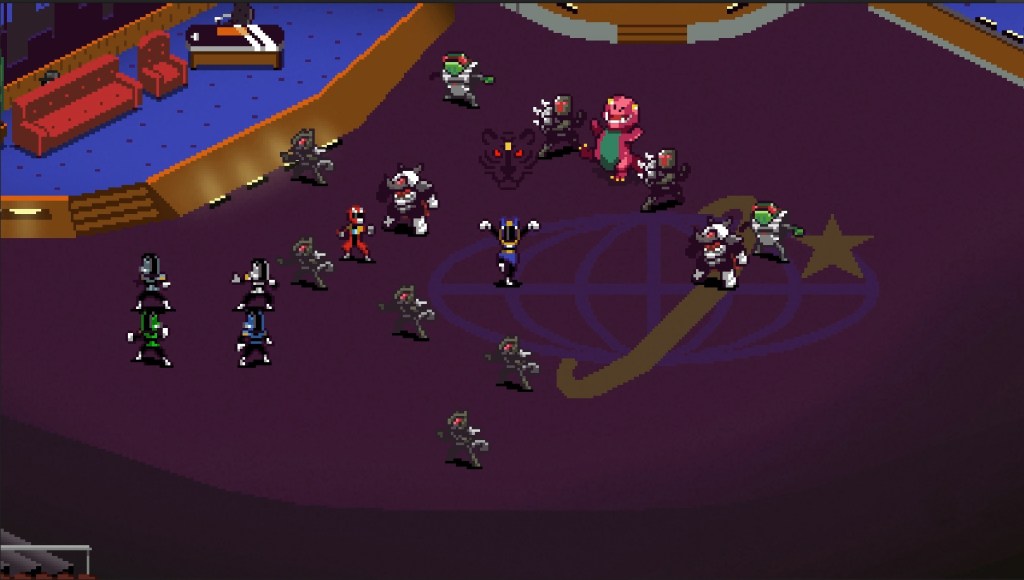
Chroma Squad’s game is a Tactical Role-Playing Game, which means all fighting is done in group combat. Though you only have five people: Leader, Techie, Assault, Support, and Scout. Leaders serve as tanks, Techies use offensive skills, Assaults are bruisers, Scouts use status conditions, and Supports are your healers. Their stats are affected by the actors you put into said roles (so in more formidable difficulties, it’s crucial to pair each person and know their parts). Attacks and skills aren’t the only things they can do, as you got teamwork. This move allows your characters to provide an extra boost in movement, teaming up to attack enemies and unleash your Ranger team’s finishing move.

Think that all you gotta do is kill enemies and the monster of the week? Think again! Throughout each map has missions called “Director’s Instructions.” They are objectives that boost your audience when done. Examples like “Kill all enemy minions before attacking the boss” or “Kill the boss with a finishing move.” Completing these objectives help in filling your audience meter on the top of the screen. Audiences are your bread and butter as they provide you money and fans for special perks.

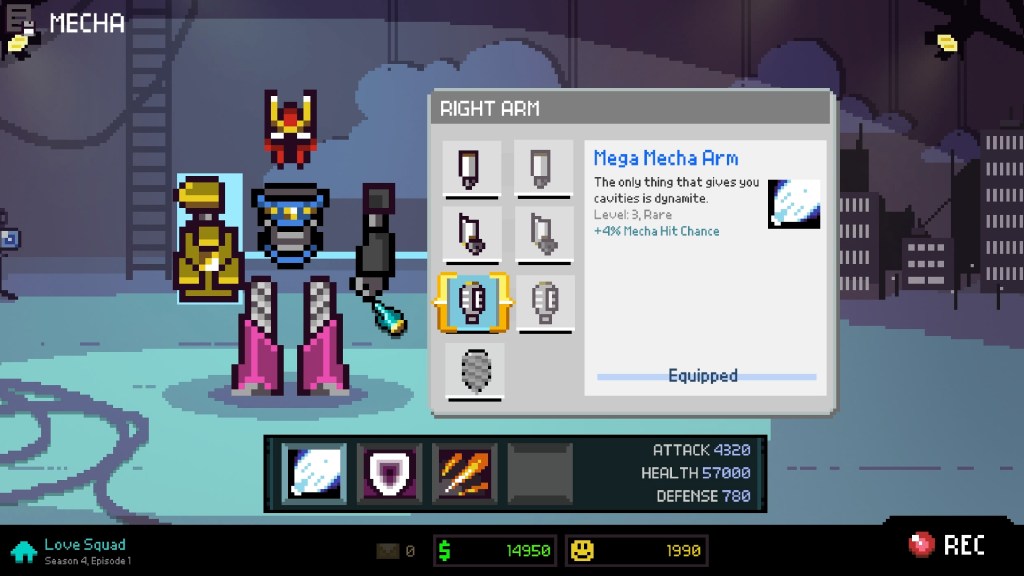
Though your squad doesn’t do the fighting, some episodes will have you fighting the boss monster in a giant robot (what Power Ranger team wouldn’t have a mecha to fight). Unlike the tactical fights, the mecha fights behave like timing combat by aiming for the green/white spot on the target bar (think Undertale’s target system.) Each successful hit will build up a combo that increases damage but makes accuracy harder. Should you miss, the enemy can strike you back and do some damage. Luckily, you can time defensive guards to protect yourself.

After each episode is done, the audience you built up is converted into money and fans. Both are important: Money is used for upgrading your studios, paying upkeep for your actors, and purchasing equipment. Fans are used as a way to give your future episodes a boost (such as gaining more audiences, higher conversion rate, or more money.)

Wait, there’s more you can do. Don’t want to spend much money? You can craft props for your heroes and mecha from items dropped from enemies or purchased from boxes..

Lastly, Chroma Squad has introduced a thing called the “Episode Editor.” This feature allows you to create some exciting episodes (some can be found on the steam workshop).

Gattai!: What the game shines in

Chroma Squad does well with the aspect of the game. The Combat is simple enough to pick up and understand without much complications. The story is pretty funny. The customization on colors for your ranger suits can have you break new stuff not seen. Such as making the pink ranger the leader instead of Red. The Episode Editor is something needed as it can make you create some episodes or parodies if you want to see them. Lastly, the game uses many references for enemies or monsters that make things funny such as fighting a Reverse mermaid or Barney the Dinosaur himself. The multiple endings do encourage replayability.

Croma-crap: what the game lacks

Though the game is fun, there are some problems with the game that can be a bit of a pain. First is the battles themselves, particularly the Director’s Instructions, which can be a bit strict and annoying, and missing them means missing valuable money and fans. Crafting, as an inexpensive part of gearing up your guys can be a pain. When you do make items, they gain random status. This can be annoying as you can get what I call the “Wizard Greatsword” problem (a weapon with contrarian stats). That and Recycling old items (you can’t sell things to shops) is a hit or miss as you can find yourself getting nothing as there are some chances of getting items back.

Lastly, though the Episode Editor is a great feature, it lacks anything that makes it suitable. One such is it forces you to use assets in the game, which means some enemies are reused. That and it can be a pain for those not so familiar with the design.

Fun Fact

Before we continue, a fun fact about the game. Behold studios ended up attracting the wrong kind of attention from Saban Brand (The company that owns Power Rangers). It led to an agreement between the two where Saban Brand gets royalty in it. It’s why below the title of Chroma Squad has “inspired by Saban’s Power Rangers.” It’s also referenced in the first part of the story where the first studio director tries to get in a legal dispute with you.

Conclusion

If you’re a fan of sentai, TRPGs, Studio management, and various other factors that make you enjoy this game? I would recommend this game for you, even if it’s minimalistic. Though who said about creating a sentai show was easy? Who knows..maybe you could be the next Saban?

Links Referenced