written by TheChoujinVirus
Note: This review may contain spoilers to the series, do not read if you don’t want to be spoiled. Also sorry for the late release of this review
Happy Thursday, it’s ya boy, Choujin here.
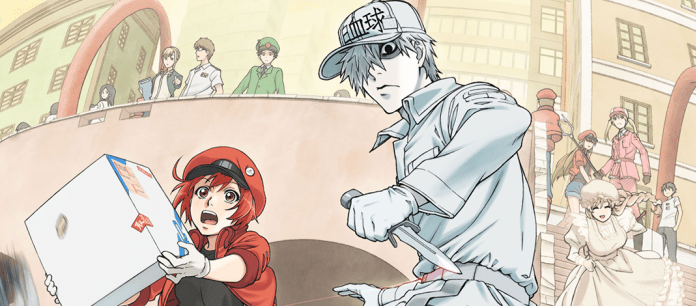
Well, with all this talk about Covid-19 and how everyone’s worried has gotten me watching an anime-themed around the human body. I’m sure everyone’s heard of shows, TVs, movies that tell this story in animated form. Though we’re not talking about Osmosis Jones (or its Tv spin-off Ozzy and Drix), we’re talking about a series that started out as a manga in 2015 and was made into an anime on July 2018 (and released on Netflix and Crunchyroll by Animeplex) known as Hataraku Saibō or by its English translation Cells at Work! So what is this anime about? Let’s dive into this exciting piece of infotainment.
Characters+Story
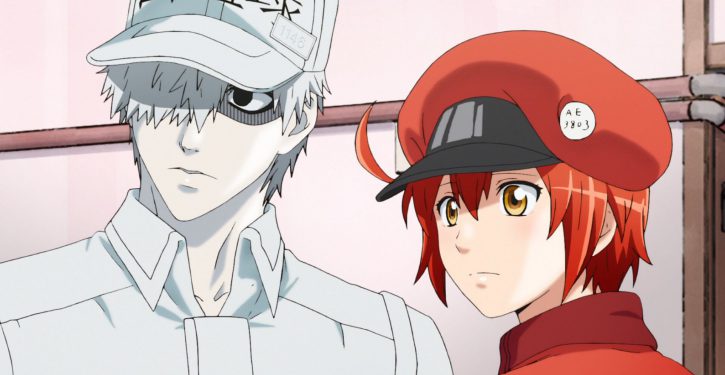
Cells at Work! It takes place inside an unnamed human body and that every cell in the human body has a job to do in it. The entire focus of the series focuses on two characters: A Red Blood cell named AE3803 and a White Blood cell named U-1146 as they do their everyday job. AE3803’s job as a red blood cell is to deliver nutrients and oxygen to cells while moving Carbon Dioxide out of it. U-1146’s job is simply killing filthy germs and viruses that threaten the body. Throughout the episodes, these two run into each other during some moments, such as when bacteria invade through a scrape wound, the body suffering dehydration and sometimes random occurrences. Throughout the story, they are greeted by a cast of various other cells such as the Gung-Ho and militaristic T Cells, the maternal maid Macrophage, and the oh so adorable hard-working Platelets. Though as the cells work each other, they have to deal with dangerous invading bacteria such as the evil Staphylococcus, Pneumococcus, and sometimes the harmless Cedar Pollen Allergens. However, they may have to deal with something far worse than those such as a dreaded Cancer Cell. Sounds pretty dangerous, but it’s more or less the everyday life of Cells at Work and that they’re only doing their job by working hard to keeping you healthy from filthy germs and viruses all while ensuring every cell inside gets their fresh supply of oxygen.
Cellular Greatness: What made the Anime good?
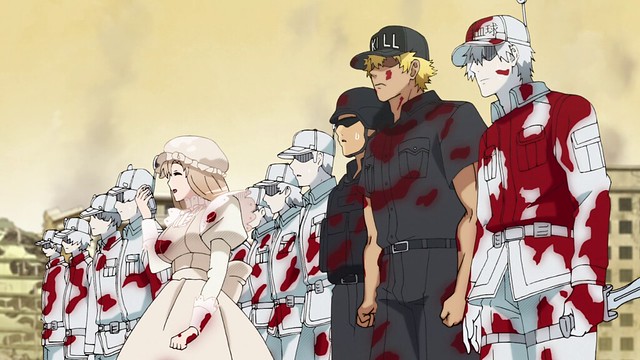
One thing I liked about the anime is how the show is more than just an anime, but what some call “infotainment,” which means the show entertains and informs. Though you do get to see the misadventures of cells, there are parts of the anime to explain certain things. In one example, the 2nd episode titled “Scrape Wound,” we are introduced to the Platelets and explained (in a humorous way) in how they help mend wounds (while also being briefed by the villains) or having brief explanations of the cells that make up the Human body. I never knew that Macrophages are cleaner cells or that there’s a cell known as a Mast Cell that produces histamine or that there is a white blood cell that specialized in killing parasites called an Eosinophil. Another thing that makes the series likable is how the anime portrays cells with specific jobs and appearances. Red Blood Cells are portrayed as delivery people who carry boxes of O2 or nutrients ala house delivery to cells. White Blood Cells like the T Cell division are militaristic police who go in and fight cells or bacteria. The Macrophages (and their monocyte counterparts) are viewed as the cleanup crew (Monocytes viewed as hazmat cleaners and Macrophages as maids with huge weapons), the platelets are viewed as children with a knack for repair and construction while regular cells are viewed as just normal people. Bacteria and viruses are also portrayed in this series as invasive viral monsters that don’t look human. Some like Pneumococcus and Staphylococcus are human enough but alien enough to be viewed as your typical anime villains, and others like Bacteria are viewed as monstrous abominations. Interestingly, the only ones not portrayed as anime villains would-be parasites, as they’re true to their real-world counterpart. Lastly, some of the stories are pretty heartwarming, and some occurrences can be dark. Two examples of this are episodes 6 and 7, which introduce us to our main villain, the Cancer Cell. Usually, we all know cancer is bad, but in this two-part episode, he is portrayed as a victim of being a “copy error” while angered that he knows his fate is to die or kill the body. Very unusual to portray a dangerous issue as a sympathetic villain. The next one is the final episode, “Hemorrhagic Shock.” Just as our main rookie blood cell is now a veteran teaching a new red blood cell, the body suffers a fatal head injury. Both cells try their best as more of their brethren disappear as the body starts to die out. The new rookie blood cell starts to break down as they feel that it’s impossible, to which our now veteran cell tries to deliver all by herself and nearly fails until the body gets a blood transfusion and is able to recover. The anime has some impressive details, but we’ll get to some issues.
Cystic Failure: What the series falters in.
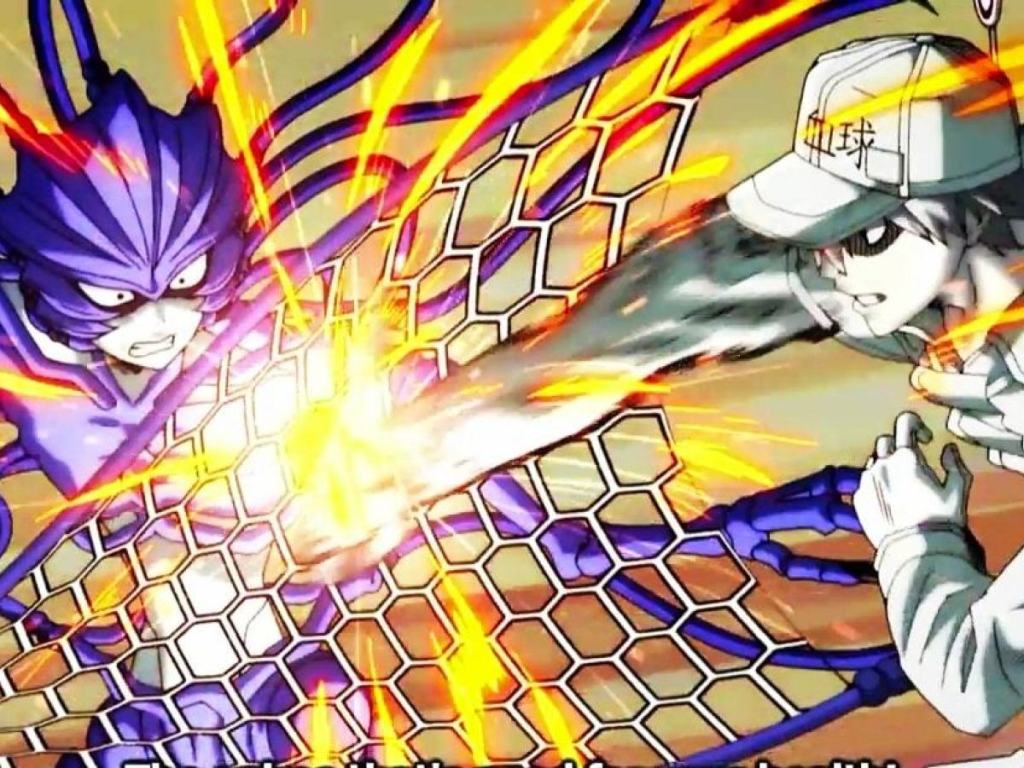
Though the anime does have some good portrayals of characters, some characters seem to be pushed on the wayside and not mentioned much. Though we get to see the Killer T Cells (alongside Helper T and Regulatory T), we rarely get to see the NK Cell (Natural Killer Cell), who only appeared in 2 episodes involving cancer, and that’s it. No mention of her or anything. Others like Basilophil are seen once and never mentioned while Eosinophil is mentioned a few times and never seen at work. There are also some cells in the body that I feel are ignored (like nerve cells, brain cells, and even fat cells) as well as other things in the body that happen. Some are mentioned in the manga, but in the anime not mentioned at all. Another gripe is that the season is pretty short, only up to 13 episodes. That’s pretty short for some seasons of anime and, to me, makes the series pretty short with only a few threatening episodes (Dehydration, Cancer, and Hemorrhagic Shock). Otherwise, most of it involves either just bacterial invasions or just a routine day. I mean, the stuff our bodies go through, I’m surprised they don’t mention other problems. One annoyance I also find is that with the English Dub of the series (not knocking on the voice talent thank you very much) but on how most of the series doesn’t bother translating the information boxes (small segments that explain either what causes the cell or describes the cell) while relying on solely on just the person telling you instead of telling and describing. It just feels a bit lazy if you still have Japanese words or no English subs for some segments.
Conclusion
In an age of cell themed cartoons, Cells at Work entertains while informs people with tidbits of facts. It may take liberty on how they portray cells and how the body works, but that’s what makes the series pretty impressive. Though I did criticize the series of being short with only 13 episodes, it’s been confirmed that the anime is getting renewed for a 2nd season coming this summer. If this is the case, I can’t wait to see more of what will happen to our body and other things. If you’re locked in due to Covid-19 and want to watch or imagine what your body does during this thing. Cells At Work is something that helps you pass the time. So look on Netflix or Crunchyroll if you’re interested for watching the series, and keep an eye out in the summer for that 2nd season.


I liked the anime too, and the aspect that there is going to be another season is even better!
Though I do agree it would be nice to have some other players make an appearance, but yes, the information was like taking a small and quick biology class but a bit more entertaining!
LikeLike