Thursday Media Review: Cells at Work!

written by TheChoujinVirus

Note: This review may contain spoilers to the series, do not read if you don’t want to be spoiled. Also sorry for the late release of this review
Introduction of Cells At Work! (English Dub)

Happy Thursday, it’s ya boy, Choujin here.

Well, with all this talk about Covid-19 and how everyone’s worried has gotten me watching an anime-themed around the human body. I’m sure everyone’s heard of shows, TVs, movies that tell this story in animated form. Though we’re not talking about Osmosis Jones (or its Tv spin-off Ozzy and Drix), we’re talking about a series that started out as a manga in 2015 and was made into an anime on July 2018 (and released on Netflix and Crunchyroll by Animeplex) known as Hataraku Saibō or by its English translation Cells at Work! So what is this anime about? Let’s dive into this exciting piece of infotainment.

Characters+Story
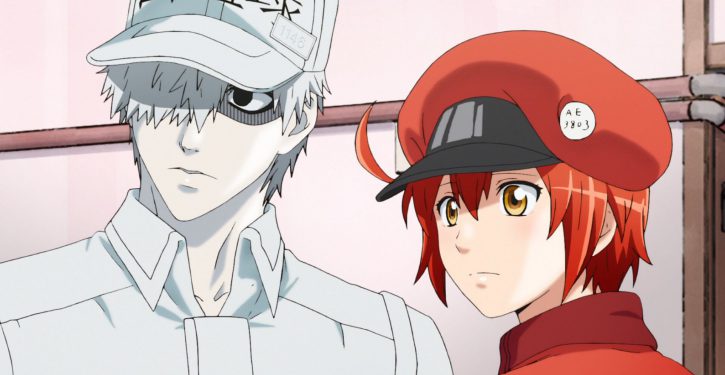
Cells at Work! It takes place inside an unnamed human body and that every cell in the human body has a job to do in it. The entire focus of the series focuses on two characters: A Red Blood cell named AE3803 and a White Blood cell named U-1146 as they do their everyday job. AE3803’s job as a red blood cell is to deliver nutrients and oxygen to cells while moving Carbon Dioxide out of it. U-1146’s job is simply killing filthy germs and viruses that threaten the body. Throughout the episodes, these two run into each other during some moments, such as when bacteria invade through a scrape wound, the body suffering dehydration and sometimes random occurrences. Throughout the story, they are greeted by a cast of various other cells such as the Gung-Ho and militaristic T Cells, the maternal maid Macrophage, and the oh so adorable hard-working Platelets. Though as the cells work each other, they have to deal with dangerous invading bacteria such as the evil Staphylococcus, Pneumococcus, and sometimes the harmless Cedar Pollen Allergens. However, they may have to deal with something far worse than those such as a dreaded Cancer Cell. Sounds pretty dangerous, but it’s more or less the everyday life of Cells at Work and that they’re only doing their job by working hard to keeping you healthy from filthy germs and viruses all while ensuring every cell inside gets their fresh supply of oxygen.

Cellular Greatness: What made the Anime good?
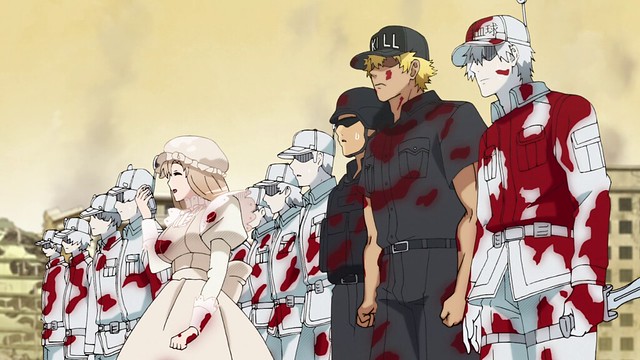
One thing I liked about the anime is how the show is more than just an anime, but what some call “infotainment,” which means the show entertains and informs. Though you do get to see the misadventures of cells, there are parts of the anime to explain certain things. In one example, the 2nd episode titled “Scrape Wound,” we are introduced to the Platelets and explained (in a humorous way) in how they help mend wounds (while also being briefed by the villains) or having brief explanations of the cells that make up the Human body. I never knew that Macrophages are cleaner cells or that there’s a cell known as a Mast Cell that produces histamine or that there is a white blood cell that specialized in killing parasites called an Eosinophil. Another thing that makes the series likable is how the anime portrays cells with specific jobs and appearances. Red Blood Cells are portrayed as delivery people who carry boxes of O2 or nutrients ala house delivery to cells. White Blood Cells like the T Cell division are militaristic police who go in and fight cells or bacteria. The Macrophages (and their monocyte counterparts) are viewed as the cleanup crew (Monocytes viewed as hazmat cleaners and Macrophages as maids with huge weapons), the platelets are viewed as children with a knack for repair and construction while regular cells are viewed as just normal people. Bacteria and viruses are also portrayed in this series as invasive viral monsters that don’t look human. Some like Pneumococcus and Staphylococcus are human enough but alien enough to be viewed as your typical anime villains, and others like Bacteria are viewed as monstrous abominations. Interestingly, the only ones not portrayed as anime villains would-be parasites, as they’re true to their real-world counterpart. Lastly, some of the stories are pretty heartwarming, and some occurrences can be dark. Two examples of this are episodes 6 and 7, which introduce us to our main villain, the Cancer Cell. Usually, we all know cancer is bad, but in this two-part episode, he is portrayed as a victim of being a “copy error” while angered that he knows his fate is to die or kill the body. Very unusual to portray a dangerous issue as a sympathetic villain. The next one is the final episode, “Hemorrhagic Shock.” Just as our main rookie blood cell is now a veteran teaching a new red blood cell, the body suffers a fatal head injury. Both cells try their best as more of their brethren disappear as the body starts to die out. The new rookie blood cell starts to break down as they feel that it’s impossible, to which our now veteran cell tries to deliver all by herself and nearly fails until the body gets a blood transfusion and is able to recover. The anime has some impressive details, but we’ll get to some issues.

Cystic Failure: What the series falters in.
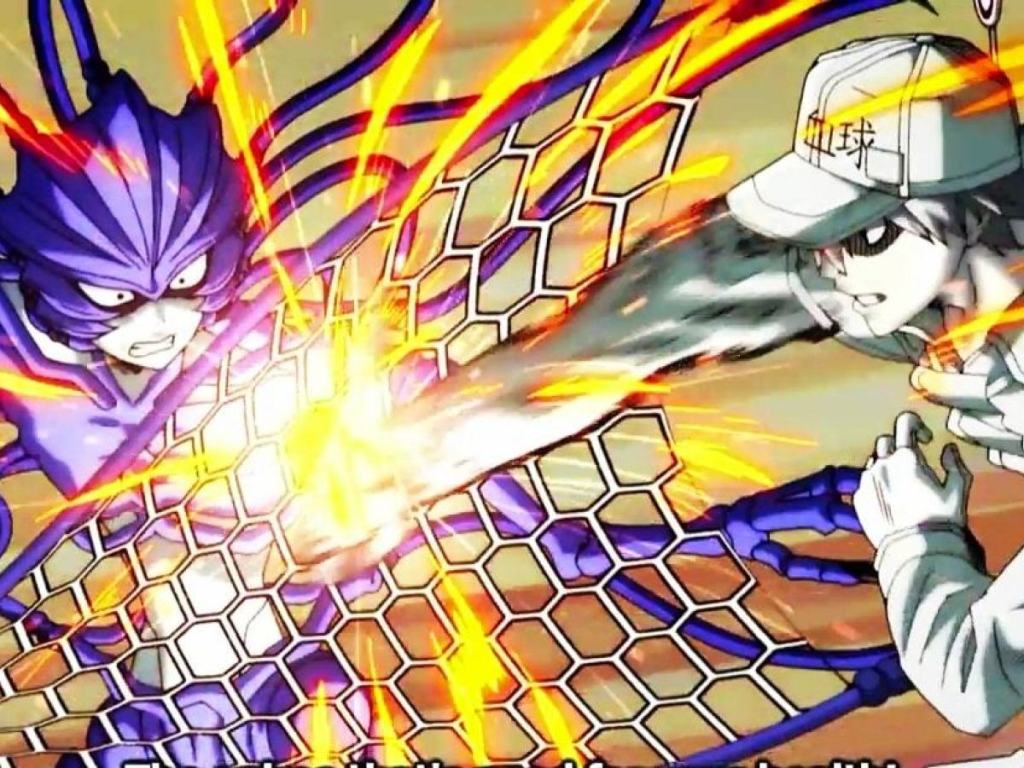
Though the anime does have some good portrayals of characters, some characters seem to be pushed on the wayside and not mentioned much. Though we get to see the Killer T Cells (alongside Helper T and Regulatory T), we rarely get to see the NK Cell (Natural Killer Cell), who only appeared in 2 episodes involving cancer, and that’s it. No mention of her or anything. Others like Basilophil are seen once and never mentioned while Eosinophil is mentioned a few times and never seen at work. There are also some cells in the body that I feel are ignored (like nerve cells, brain cells, and even fat cells) as well as other things in the body that happen. Some are mentioned in the manga, but in the anime not mentioned at all. Another gripe is that the season is pretty short, only up to 13 episodes. That’s pretty short for some seasons of anime and, to me, makes the series pretty short with only a few threatening episodes (Dehydration, Cancer, and Hemorrhagic Shock). Otherwise, most of it involves either just bacterial invasions or just a routine day. I mean, the stuff our bodies go through, I’m surprised they don’t mention other problems. One annoyance I also find is that with the English Dub of the series (not knocking on the voice talent thank you very much) but on how most of the series doesn’t bother translating the information boxes (small segments that explain either what causes the cell or describes the cell) while relying on solely on just the person telling you instead of telling and describing. It just feels a bit lazy if you still have Japanese words or no English subs for some segments.

Conclusion

In an age of cell themed cartoons, Cells at Work entertains while informs people with tidbits of facts. It may take liberty on how they portray cells and how the body works, but that’s what makes the series pretty impressive. Though I did criticize the series of being short with only 13 episodes, it’s been confirmed that the anime is getting renewed for a 2nd season coming this summer. If this is the case, I can’t wait to see more of what will happen to our body and other things. If you’re locked in due to Covid-19 and want to watch or imagine what your body does during this thing. Cells At Work is something that helps you pass the time. So look on Netflix or Crunchyroll if you’re interested for watching the series, and keep an eye out in the summer for that 2nd season.
References

Thursday Media Review: The Division 2: Warlords of New York

Written by TheChoujinVirus
Note: The review contains spoilers for the game, so if you don’t want to get spoiled, skip this article.

Happy Thursday everyone, it’s your boy Choujin here.

March is a good day for gaming. With Doom Eternal and Animal Crossing: New Horizons coming in 2 weeks, it’s something everyone’s anticipating. However, other games, too, have anticipated releases in March as well. One of which is the expansion to Ubisoft’s game Division 2 that was released yesterday (though was released on the 2nd of March). The expansion is known as The Division 2: Warlords of New York (I know an odd title that makes me feel like it’s something from a bad World of Warcraft expansion). However, the game has some aspects of it that make it charming and brings us back to the location of the first Division game: New York City. So how does the expansion bring to the month of March? Here’s my review of Tom Clancy’s The Division 2: Warlords of New York.

Summary of the Plot (Spoiler alert for The Division and parts of The Division 2)

The story takes place in an alternate 2015/2016 in which an eco-terrorist attack on Black Friday brings the U.S. to its knees is unleashed. This virus known as the Green Virus (or Dollar Flu) causes a massive Pandemic all over the United States. The U.S. Government not only sets up their offices to maintain order the best they can, but they also activate their sleeper agent group called The Division. They serve as the last line of defense in dire situations in a collapsed society. In the Division 2, you play as a Division agent nicknamed “The Sherriff” as he/she heads to Washington D.C. when the SHD Network goes down (The network vital for powering the Division’s arsenal of equipment and communication with other agents). Throughout the game, the Sherriff is tasked with returning the SHD network online as well as dealing with several factions within D.C. Such as the sadistic Hyenas, the vengeful Outcasts, The militaristic True Sons and the high-tech militaristic Black Tusks. Warlords of New York has the Sheriff being sent to New York City after they discover that the Division’s main enemy (and the original antagonist in the first game) Arron Keener has unleashed his attack on The Division in New York, undoing a lot of the work from the first game. It’s now up to the Sherriff to find Keener and stop him before he unleashes a new viral strain worse than the Dollar Flu as well as uncover a deep plot involving Rogue Division Agents that go as far as with some older guards.

Gameplay

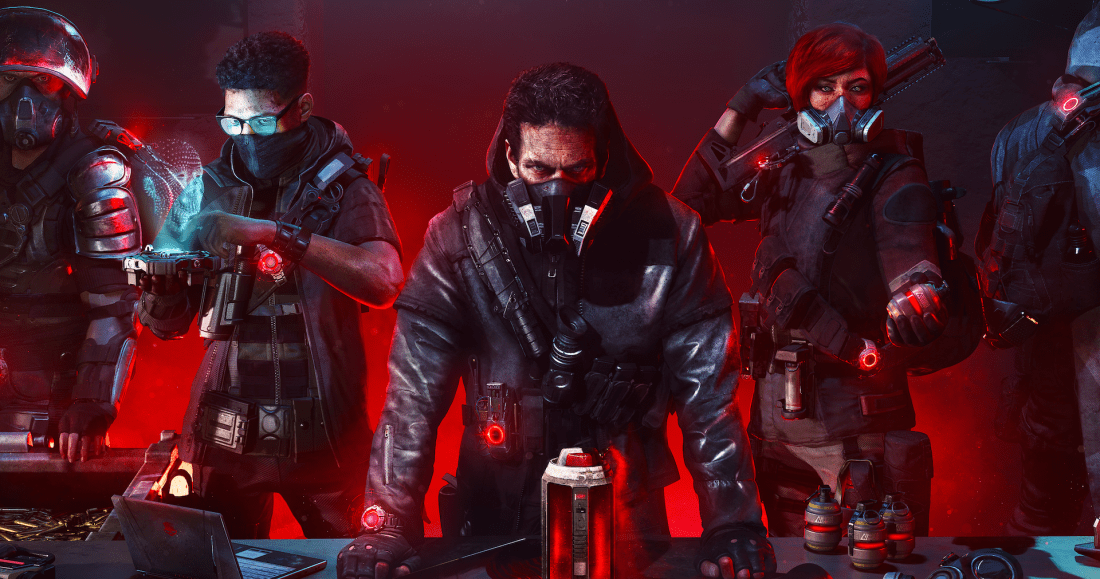
Warlords of New York is similar gameplay-wise to vanilla Division 2 though it does add some unique gameplay mechanics to the game. One such change is introducing a Fog of War to New York. As you explore the districts of New York City, parts of the map become exposed that show new areas, events, control points, and SHD Caches. Another change is the mission Progression system, which adds an interesting change. Unlike the Division 2, in which you progress through specific areas and leading up to the fight at an enemy stronghold, Warlords of New York have you going on a manhunt against Keener and to do that you must hunt down Keener’s guards: Four major Rogue Division Agents who have managed to manipulate the original factions of the first game: The Cleaners and the Rikers. For those unaware, the Cleaners and Rikers were two factions from the First Division game. To find the rogue agents, you have to head to specific areas on the map that are hinted as big yellow circles, thanks to the Fog-of-War. Solving each progresses the story against one of the four Rogue agents, and by completing it increases your progress in finding Keener.  After going through several areas and defeating Keener’s four agents, you now get your chance at fighting Agent Keener on Liberty Island and a strong presence of Black Tusk. Though throughout the game, there are mini-events like rescuing hostages, territory control, and breaking propaganda machines. To make the game easier, besides acquiring loot like guns and armor, your agent has access to several “specializations” that give them new tools to use besides their usual arsenal of portable gun turrets, drones, and roller bombs. Classes like the Gunner lets you wield a Minigun to mow enemies down to the Survivalist that lets you use a crossbow to shoot them with explosive arrows and fire. Though the game does introduce a new class (The last being the Technician class) called the Firewall. This class lets you use a flamethrower to set fire to enemies directly.

SHD’s Strength: What makes Warlords of New York Good

Warlords of New York brings some new faces (or old returns for those who have played the first Division) as you fight the factions like the Rikers, Cleaners, and Rioters that do have their own unique quirks compared to Vanilla Division 2’s Hyenas, Outcasts and True Patriots. Another positive thing the expansion adds is some interesting boss fights that do add some unique fights that add to their lore. One such fight I liked was against Theo Parnell, one of Keener’s rogue agents. His boss fight’s a digital version of whack-a-mole where he uses holograms to hide while you have to figure out which is the real Parnell. Another I liked was the fight against Javier Kajika and having to deal with his shock traps and having to move from one spot to another as steam starts to obstruct your vision. The last fight I liked was the final battle between you and Arron Keener. In the final battle, you’re not fighting Keener and an army of troops: It’s just you and him, agent vs. agent with just your tech against Arron’s. It makes it feel like a final battle. The Fog of War aspect of the Division 2 does encourage exploring the area for every nook and cranny. The last thing I like about the Division 2 is always the lore and how It references back to the First Division game with some character callbacks, areas, factions and such. It does have you wonder a bit more about the lore of the first game while playing Warlords of New York. Lastly, the detail of New York is stunning as they show what it looks like after a societal collapse would look like. Seeing streets turned into swamps, crumbled main buildings and areas become enemy strongholds, and even seeing Liberty Island become the spot of a final battle is stunning.

 Agent Needs Assistance: what Warlords of New York lack

The game does have some good things in the game, there are some problems I found while playing the game. One example is how, after defeating the rogue agents, you only get information on Keemer and nothing much besides that. Sure they give a hint about taking over the Oil Tanker after killing Vivian Conley or destroying a giant drill when fighting Kajika. One annoyance was that besides those two, you barely saw any changes besides that. Like after killing Theo Parnell, enemies I fought still used some drones. I felt that killing a guy who was a drone specialist would somehow deliver a blow against the enemy, but it didn’t feel like I took out that threat. Another thing I did like was the challenge, but I felt that some of the enemies were annoying as hell. It’s true that The Division 2 does require some strategy to fight enemies, but some of the new enemies can feel less of a challenge and a bit annoying. One such is the Cleaners faction, which loves to use flamethrowers (particularly their default attack units and Tank class). It can be hairpulling having to avoid getting a flamethrower facial or getting your eyes blasted by the Riker shield tanks. Unfortunately, the mini-events in New York don’t seem to be any different than before the expansion. It’s a shame as it would be nice to see something new other than opening caches from enemy territories, saving hostages or taking control points. Perhaps it would be nice to see something different, but that feels like a nitpick on my half.

Hidden SHD Cache: Cool little secret

One little thing I noticed when playing Warlords of New York was that in Haven, there’s an area where I found an NPC puppy there. I found out that I could actually have my character pet this puppy. I found out this was a callback to some Division 2 fans who wanted to pet the NPC feral dogs seen wandering around D.C. (as the sad part is you can shoot them but not pet them). It’s a nice thing to add and something cute in between fighting ex-Convicts, rogue agents, and Sanitation workers with flamethrowers.

Do you trust The Division? (My conclusion)

In conclusion to my review of the game, It’s a great game that gives fans of the first Division game some memories of their first foray into New York and gives us a stunning story. I forgot to mention that after beating the game and finding that the Rogue Agents continue beyond Keener, there’s a new endgame in seasons in which you have a new cast of Rogue Division agents to fight (though they won’t be live until the 9th of March). If you want my opinion, your boy would say that Warlords of New York adds some new content into The Division 2 and gives a stunning closure to one of the major villains in the series.

References

Thursday Media Review: Monster Rancher Anime Part 2 (Ep. 16-30)

Review by TheChoujinVirus
Note: This is part 2 of a review on the Monster Rancher anime, to see part 1, please click here. As before, there are spoilers, so you’ve been warned

Hello, it’s ya boy Choujin

Welcome to part two of my review of the Monster Rancher anime. This time we’ll be focusing on episodes 16-30. If you want a recap of the last events and a brief explanation of the Monster Rancher series, I would suggest you click on the link here to catch up. Other than that, let’s continue our adventure.

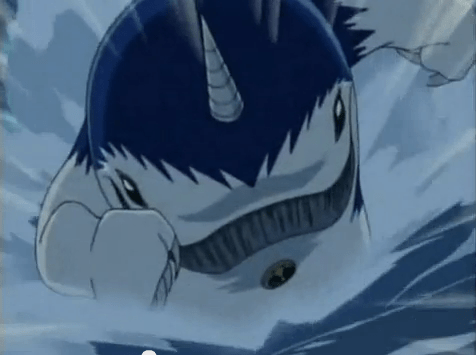
To recap from the last episode, our heroes have enlisted the help of Captain Horn and his crew of Rockies to help them cross the sea in order to find the Phoenix before Moo can find his body. Suezo complains about why the group has to do work as passengers on Horn’s ship. Horn reassures them that he’s an honorable pirate (despite Suezo’s hatred for the pirate captain.) Meanwhile, below the sea, Gali orders his troop of whale monsters called Zillas and their leader Gooji. The blue whale monster is ecstatic to fight his old foe, Captain Horn, again.Back on Horn’s ship, Horn finds that Golem is shirking his work, despite Golem’s pleas that he hates the water. The pirate crew decides that in order to “face his fears,” they throw him overboard. However, they realize that Golem is afraid of water not because he’s afraid of water, but because he’s a giant rock monster and thus cannot swim. With Genki’s help, they get Golem back aboard Horn’s ship. During Dinner, Holly visits Golem and discusses how much has changed since they all started their adventure. Holly doubts herself in thinking they may never be able to find the Phoenix as the land they’re visiting is entirely new to her and that there are rumors that Moo’s influence is greater there. Golem reassures Holly that as long as they work as a team, they’ll be able to find the Phoenix. However, just as the peaceful night was going so smoothly, the group is ambushed by Gooji and his Zilla troops. The group managed to repel Gooji’s Zillas, which angers the monstrous Gooji as he decides to take care of our heroes himself.  Gooji captures Holly and threatens the rest of them, which causes Golem to snap out of his fear of water in order to repel the giant whale. Horn orders his Rockies to tie up Gooji and dispose of him in a giant whirlpool for good. Gooji tries to take our heroes down with him, but again, Golem intervenes and knocks the whale into the depths once and for all (Though not without Golem returning back to his post upon realizing he’s still near open water).  Horn delivers our group of heroes to the new land. The Group thanks Horn for helping, and Horn returns the thanks by giving them a map of the new land.

Though their new journey is not without new perils besides Gooji and his Zilla troops, Gali dispatches his deadly illusionist Joker to ambush the heroes. Our heroes now have to find a way to get over a massive cliff, which leads to Tiger and Hare arguing. Moochi discovers a cave buried behind rubble, and our group now has a practical way through the cave. However, the darkness also hides Gali’s Joker. A cave in and some bats later cause them to return back to their new area. However, they discover some new paths that the cave in created. Tiger takes this chance to accuse Hare of trying to find a quick lazy fix that hurts everyone and outright accuses him of caring more about money than friendships. Hare snaps and accuses Tiger of being a hypocrite (as he brings up Tiger’s past about being a Bandit). The group then falls into Joker’s trap as they’re now searching for Hare, who promptly ran into the caves after his fight. Joker makes his move and gives Genki and his friends a run for their money with his ability to create illusions. This causes them to succumb to illusions like fighting Moo, peaceful fields, open water, falling daggers, and chains. Though just before Joker can deliver the killing blow, Hare returns and saves the group from Joker. During the fight, Hare learns a new move known as Dragon Kick. With that, he dispatches Joker, and the group escapes the cave.

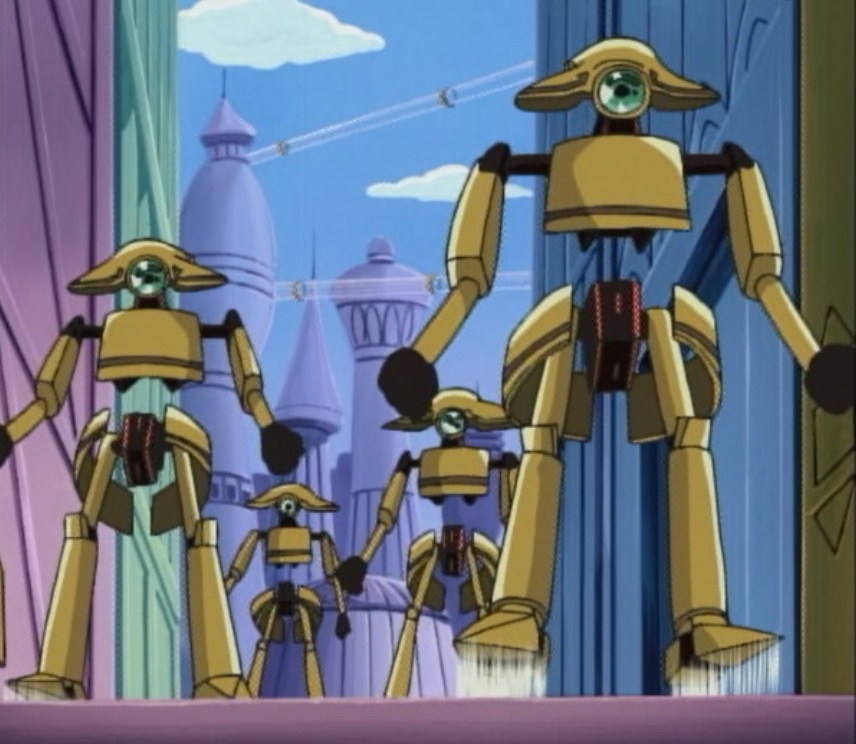
Along the journey, they managed to run into a new face as they explore the ruins of an abandoned city. This guy’s name is Hengar and was one of the monsters referenced in Monol’s story. He aids them from other Hengars that viewed the heroes as a threat to the ancient city that they maintained for so long. It’s humorous as the group (save for Genki and Hare) is puzzled over some of the technology used (such as a vending machine). Though with Hengar’s help, they managed to not only survive the ordeal but managed to reacquire the Magic Stone that was dropped when they fled the other Hengar. It’s a pretty sad ordeal as Hengar learned that the Ancient’s war was over, and as he tried to explain to his other brethren, they replied by blasting him to pieces. They also learn of the Hengar’s boss known as Techno Dragon and how he controls all the Hengars (save for our companion’s Hengar).

  After leaving the city and saying good-bye to Hengar, the group finds themselves pursued by Gali’s Dokoos. Throughout this battle, Hare calls out that Suezo has no actual talents of combat (despite Suezo’s protest that he can fight.) The group has to deal with not just the rubbery monsters, but Suezo’s existential crisis on how he couldn’t defeat them. Genki tries to help Suezo discover this journey, but it takes one major crisis for Suezo to discover his Teleport ability.
Along their journey, Genki and company run into Pixie and Big Blue again, this time now an enemy of Moo and fighting on the side of good. When she and Genki are separated from the group, they are able to work together and defeat the Scaled Jells attacking them, all while learning that Moo has started an excavation in the north of the continent, hinting that he found his old body.

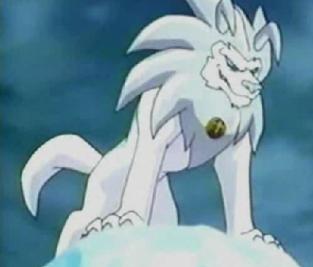
With Gali defeated, Moo’s Big Bad Four is now down to only two: Grey Wolf and Naga. Grey Wolf gets news of Gali’s defeat from a Cabalos. Grey Wolf views this as a worthy hunt, as he gives orders to his Black Worm troops to attack the group. The group gets ambushed by one of them, and by capturing one of them, they learn that Grey Wolf is one of the remaining Big Bad Four (which shocks Tiger). Though in the ambush, Holly is poisoned by one of the Black Worms. Tiger goes and finds the antidote while defeating the Black Worm’s Captain. They are able to save Holly and continue on.
The group later runs into Mocks and their leader Ebony as they are captured. Though Mocchi escapes and runs into a strange monster named Ducken, who guides Mocchi out of his home as he’s afraid they’ll find him. Mocchi, with some pressuring on Ducken, heads to the Mock’s camp to rescue his friends as he disguises himself as a Mock. Though the operation is a bust, Mocchi runs back to Ducken and finds a bright idea of using Ducken’s tunnels to fight. It’s in this argument that Ducken was too scared to fight against the Mocks and Ebony. Mocchi reassures him, and Ducken agrees to let Mocchi use the tunnels, and with his help, Mocchi is able to defeat the Mocks and rescue his friends. Also, Ducken learns the importance of friendship.

Later on, they learn that some monsters aren’t naturally evil and either learned the error of their ways. Such monsters such as Undine, a mermaid monster Golem, falls in love and, in her chaos, kills herself when she realized that Golem believes that she’s still good regardless of her affinity.  The others happen to be three monsters Centaur, Celios, and Dragoon. Three Monsters who work for Grey Wolf but have a code of honor who at first want to capture the group and later aid them when a group of Salamanders tries to steal their thunder. Lastly, they run into an abandoned factory where they must deal with a robotic insect called Melcarba, who, just like Hengar was created long ago and created with a purpose that was wasted.

Throughout the ordeal, they eventually take the fight to Grey Wolf. For Tiger, this makes it extremely hard as this Baddie is his own brother. Before the battle, Tiger has a dream when he taught his brother how to be strong. By the next morning, after the Pendant is found, they are greeted by one of Grey Wolf’s Cabalos, declaring that his boss demands Tiger to fight him in a one and one fight. Tiger departs to fight his brother while Genki and the rest follow behind him, fearing that their friend may be walking into a trap. Tiger gets flashbacks of the event that led to Grey Wolf being captured by Moo until he arrives at the dueling ground. The two of them exchange quips as Grey Wolf calls Tiger a coward while Tiger tells his brother that he’s been lied to. They both fight as Grey Wolf gives Tiger an ultimatum: Join Moo’s forces. Tiger turns it down, which led Grey Wolf to cheat with his Cabalos soldiers. Genki and his friends intervene, leaving Tiger and Grey Wolf in a one and one battle. The two wolves equally matched until Grey Wolf uses his tail to blind Tiger (a trick Tiger taught his brother). However, Tiger managed to pull one last trick against Grey Wolf. He used his horns to gore his brother though his Crest. Grey Wolf learns that his brother Tiger still loved him. His last words were that he wished they could go back when they were little. Unfortunately, Grey Wolf dies of his injuries as Tiger howls in mourning. Though they defeated the third of Moo’s Big Bad Four, Tiger lost a brother.

While back at the excavation site, Moo’s forces have discovered their master’s original body.
 With news of Grey Wolf’s demise, Naga of the Big Bad Four remains, and our group must continue their travel to find the Phoenix. Throughout their journey they must deal with Naga’s forces. The first one being Stone Dragon. However, they managed to get help from the odd caterpillar named Color Pandora. It’s revealed that Stone Dragon’s been kidnapping the Color Pandora’s children, hence why they resorted to using traps. Another ally they meet is a Ferry Captain named Jim and his companion Eared Mew. They help him deal with Naga’s dangerous Arrowheads. Both of these allies help Genki and company defeat Naga’s threats.
Interestingly, they had one incident where they had to lend aid to two warring monsters. Two tribes of Ape and Rock Ape both started waging war when our heroes awaken a baby monster named Bossy. The group managed to find a solution to where both tribes work together and end their squabbling. Though, as the group is unaware, Moo is marveling over his newly discovered ancient body. Pixie finds this news and heads out to warn Genki and his friends.

The series is impressive and gets a bit dark, especially with the battle between Tiger and Grey Wolf. What I also like about it is that the series does reference past episodes and not forget certain things (Golem’s Aquaphobia and how some episodes have Suezo referencing his attempt at trying to master Teleport). Another thing that I like is how some episodes do hit hard in certain parts. Undine’s Lake actually made you feel sorry for the villainous Undine and how she commits suicide upon realizing Golem’s kindness regardless of if she was on the villain’s side. Another good episode was Tiger’s Battle with Destiny as we get to see a fight between brothers. Some characters also have unusual quirks that make them cute or interesting. Some of them being Hengar, Eared Mew, Captain Jim, and Ducken have some important reasons for their goals (good or bad).
 As mentioned in my last review, the Japanese version has some alterations and changes. Though some are an exciting twist (Ducken in the Japanese version is actually female while the dub made him a male.) while others are typical (Changing Gali’s attacks that reference God to his name such as Gali Finale) and some changes are just really odd (Removing a scene that had mud on Pixie’s face). One that gets me scratching my head is how the “Unlock Your Disk” segment refers to Gooji as Zilla Kong.
Another thing that changed was the aforementioned Tiger’s Battle With Destiny. The episode was not aired when the show was on FOX due to a scene involving Tiger impaling Grey Wolf. It’s odd as Undine’s Lake is broadcast as it involves the monster committing suicide. Then again, the episode is still aired, so at least it’s not like Pokemon where some episodes are outright ignored.

With that, that’s part two of my review of Monster Rancher. Wow, already 30 episodes, and we still got plenty of other episodes soon. So see you next time for the next installment.

References